Two Waist Icons. Weight Loss: A Practical Guide for Designers and Marketers
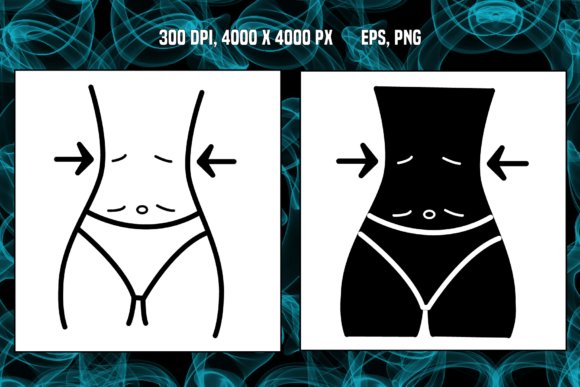
In the fast-paced world of digital marketing and web design, visual communication often speaks louder than text. When addressing sensitive topics like health, fitness, and body transformation, the choice of imagery is critical. This is where Two Waist Icons. Weight Loss become an essential asset for creators. These are not merely decorative elements; they are functional tools designed to convey progress, measurement, and health goals without relying on potentially alienating photography. For entrepreneurs, bloggers, and small business owners in the wellness niche, understanding how to properly utilize these vector assets can significantly enhance user engagement and brand trust.
The package typically includes high-resolution EPS and PNG files, offering transparency and scalability up to 4000 x 4000 pixels at 300 dpi. While this technical specification sounds straightforward, many users overlook the strategic implications of using such specific graphic elements. Misusing these icons can lead to mixed messaging, poor accessibility, or a disjointed user experience. Let us explore common pitfalls and provide actionable advice on integrating these waist measurement icons effectively into your projects.
Understanding the Value of Vector-Based Health Icons
Before diving into usage strategies, it is vital to understand why designers prefer vector formats like EPS over standard raster images for icons. Vectors are mathematical representations of shapes, meaning they can be scaled infinitely without losing quality. For a Two Waist Icons. Weight Loss set, this ensures that whether the icon is used as a tiny bullet point in a mobile app or a large header graphic on a desktop landing page, the lines remain crisp and professional.
Many beginners make the mistake of assuming that any image file will suffice for web design. However, using low-resolution JPEGs for icons often results in pixelation, which undermines the credibility of a health brand. Credibility is paramount when discussing weight loss. Users are more likely to trust a service that presents itself with polished, professional visuals. The inclusion of transparent PNGs also allows for seamless integration over various background colors, a feature often neglected by novice designers who struggle with white boxes around their graphics.
Common Mistakes in Icon Selection and Application
One of the most frequent errors creators make is ignoring context. A waist icon is a symbol of measurement and change. If placed alongside aggressive or shaming language, the icon can inadvertently reinforce negative stereotypes about body image. Conversely, if used in a supportive, educational context, it becomes a symbol of empowerment. Always evaluate the surrounding content. Ask yourself: Does this icon support a narrative of health and vitality, or does it feel clinical and cold?
Another significant oversight involves color psychology. Many users download the default black or gray versions of these icons and place them on vibrant, energetic websites without adjustment. This creates a visual disconnect. Health and wellness brands often utilize greens, blues, or warm oranges to evoke feelings of freshness, calm, or energy. Failing to recolor the vector elements to match your brand palette can make the design feel generic and unthoughtful. Since you have access to EPS files, editing the color is simple, yet many skip this step, resulting in a lackluster presentation.
Technical Missteps That Hurt Usability
From a technical standpoint, file size and format selection are crucial. While the source files are high resolution (4000 x 4000 pixels), uploading such large PNGs directly to a website can severely impact load times. Slow loading speeds frustrate users and negatively affect SEO rankings. A better approach is to use the SVG format if your platform supports it, or optimize the PNGs for web use. If you must use the provided PNGs, ensure they are compressed appropriately without sacrificing visible quality.
Additionally, some designers overlook accessibility. Icons should never stand alone without context for screen readers. If you use a waist icon to represent a "weight loss tracker" feature, ensure there is accompanying alt text or aria-labels describing the function. Relying solely on the visual cue excludes users with visual impairments, limiting your audience reach and potentially violating accessibility standards.
Strategic Implementation for Better Results
To maximize the impact of Two Waist Icons. Weight Loss, consider using them as part of a broader visual story. For instance, instead of just showing a static waistline, use the two icons to demonstrate a before-and-after scenario subtly. One icon could represent the starting point, and the other the goal, connected by a progress bar or a timeline. This transforms a simple graphic into a dynamic element that encourages user interaction and goal setting.
For educators and content creators, these icons can break up dense text in articles about nutrition or exercise routines. Placing an icon next to key takeaways helps readers scan content more efficiently. However, consistency is key. If you use these waist icons, ensure that other icons on your site share a similar line weight and style. Mixing thick, bold icons with thin, delicate ones creates visual chaos and distracts from the core message.
- Check Licensing: Always verify the license terms before using downloaded assets in commercial projects. Ensure you have the right to modify and distribute the designs.
- Maintain Proportions: When resizing, hold the shift key to maintain aspect ratio. Distorting the waist icon can make it look unprofessional and unrealistic.
- Test on Multiple Devices: Verify that the icons remain clear and recognizable on both mobile screens and large monitors.
Evaluating Quality Before Download
When searching for assets like Two Waist Icons. Weight Loss, do not judge solely by the thumbnail. Look for previews that show the icon at different sizes. Check if the vendor provides multiple file formats. The presence of EPS indicates a professional-grade asset suitable for print and high-end digital work, while PNGs are ready for immediate web use. Avoid sources that only offer low-resolution JPEGs, as these will require significant cleanup work.
Furthermore, consider the versatility of the design. Are the lines clean? Is the style modern or dated? A minimalist design tends to age better and fits more seamlessly into contemporary web layouts. Complex, overly detailed icons may look impressive in isolation but can become cluttered when reduced to small sizes on a smartphone screen.
In conclusion, the effective use of health-related icons requires a blend of technical knowledge and empathetic design thinking. By avoiding common pitfalls such as poor color matching, neglecting accessibility, and ignoring file optimization, you can elevate your digital presence. Two Waist Icons. Weight Loss are more than just graphics; they are communication tools. When used correctly, they help convey complex health concepts simply and respectfully, fostering a positive connection with your audience. Take the time to integrate these elements thoughtfully, and your design will not only look better but perform better too.